
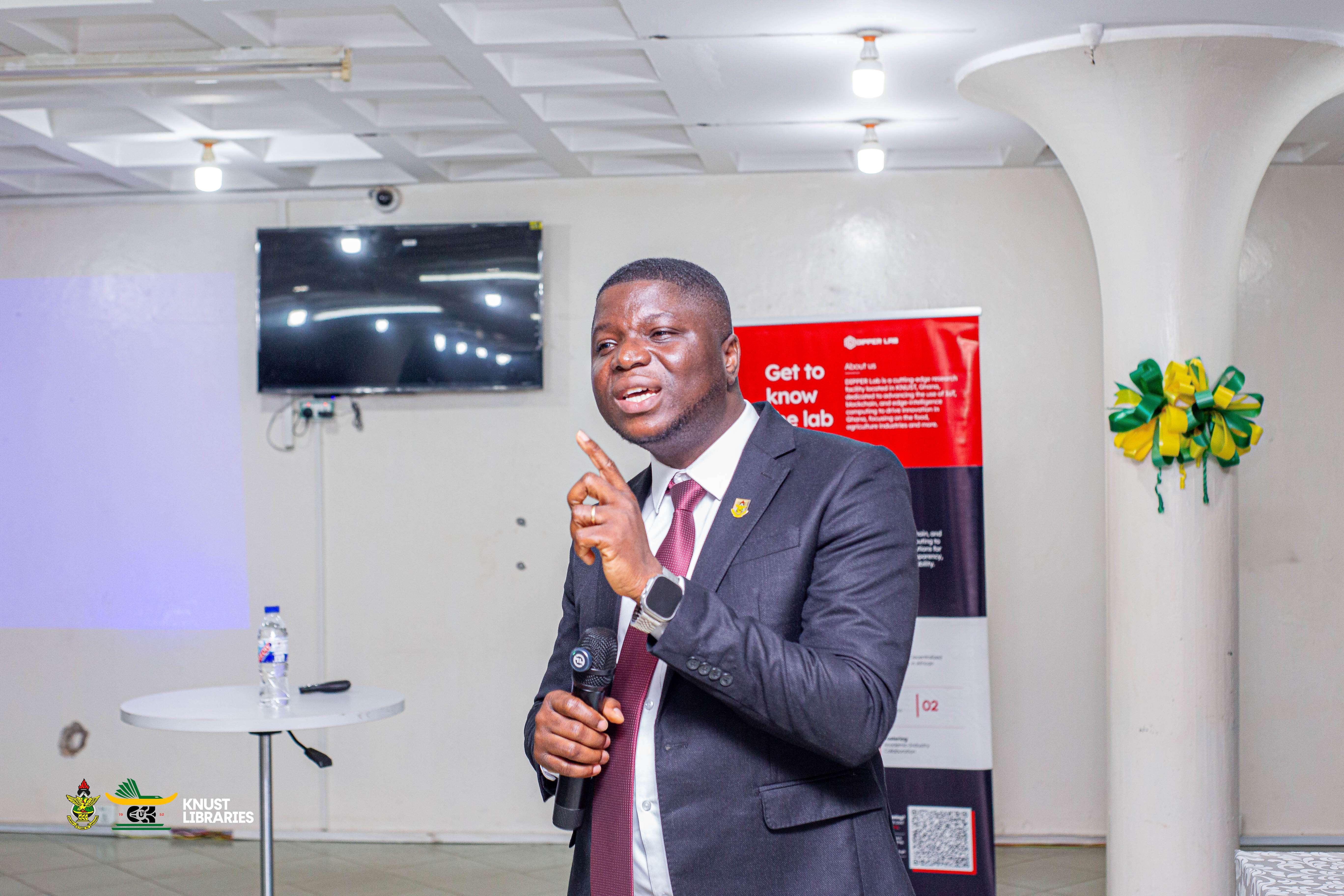
The eighth edition of the Kwame Nkrumah University of Science and Technology, Kumasi's ScienceFriday has highlighted the need for researchers and innovators to move beyond academic outputs and focus on developing practical, scalable solutions that deliver lasting social and economic impact.
Dr Edward Mensah, Deputy Librarian, said the theme, “From Science to Business: Ways and Means to Scaling Research Impact,” was timely because it provided an opportunity to explore practical ways of translating research into solutions for society.
“This is a platform to bridge research, innovation and impact,” he said.
He said the programme was intended to encourage participants to learn, engage and draw inspiration from experiences that could strengthen the connection between research and real-world impact.
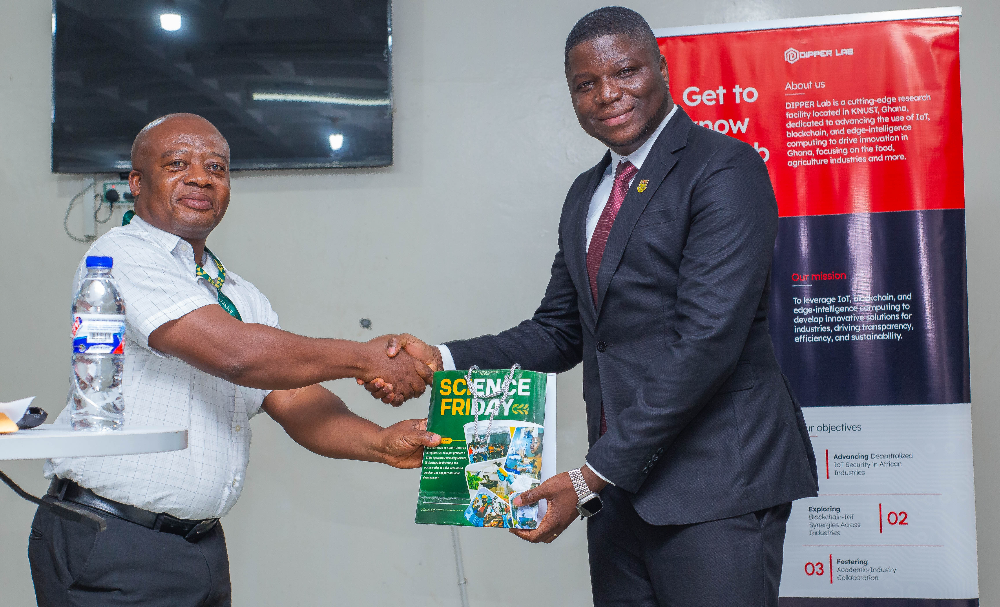
Prof. Eric Tutu Tchao, Head of the Department of Computer Engineering, challenged researchers to rethink their approach to research, particularly the relationship between science, innovation and commercialisation.
He referred to the basic definition of science as “a systematic method to study our physical and natural world through observation and experimentation” and argued that some research practices fell short of that standard.
According to him, students and researchers sometimes begin projects with solutions already in mind and subsequently look for evidence to support them.
“If you look at the way we even do our final year projects, it's like you have the solution in mind already,” he said. “You have your code already. You are just looking for something to support something and then that presents it.”
Prof. Tutu Tchao said this was one of the major reasons research projects failed to progress beyond the laboratory.
He argued that final-year projects and research grants should not be treated merely as deliverables to satisfy academic or funding requirements. Instead, researchers should approach them as genuine scientific enquiries capable of producing knowledge, innovations and sustainable solutions.
Prof. Tutu Tchao also reflected on the substantial effort required to secure research funding, noting that obtaining grants, whether small or large, required significant work.
However, he questioned what remained after some projects had been completed.
“If you look at yourself, colleagues that you know have gotten grants after the project has ended, what is there to show for the grants?” he asked.
He acknowledged that some projects had been successful but cautioned against a culture in which researchers focused primarily on short-term outputs, photographs, launches and reports without building systems that could survive beyond the funding period.
“Short-term wins, quick output and superficial deliverables is not a strategy for scaling research impact,” he said.
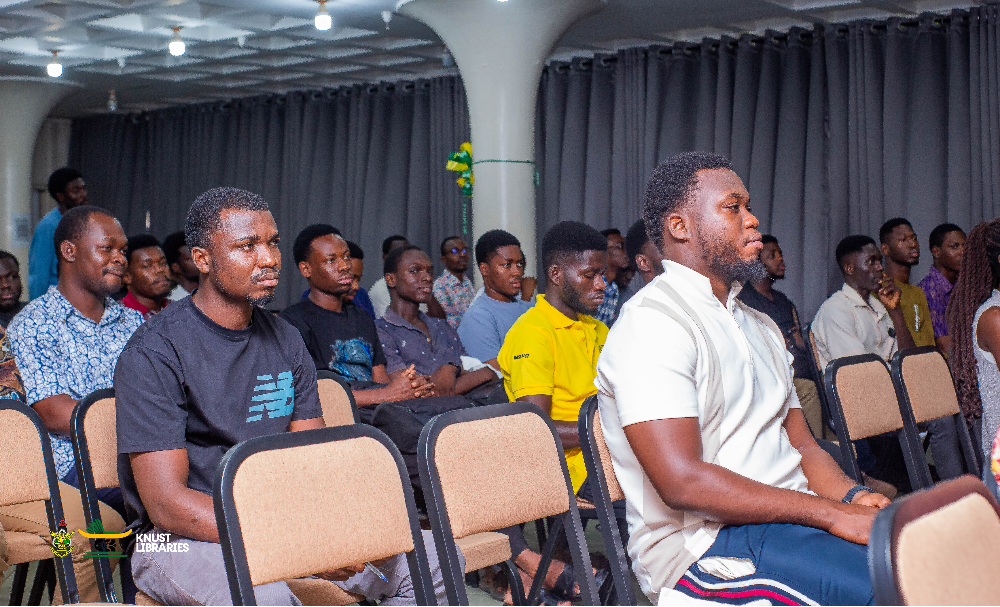
Instead, he advocated sustained investment in fundamental science and human capital, arguing that long-term impact depended on developing people and building strong research systems.
Prof. Tutu Tchao also stressed the need for researchers to pay greater attention to intellectual property when developing innovations.
He recounted an encounter with officials from the Ministry of Environment, Science, Technology and Innovation during discussions on research innovations. A comment from a chief director, he said, made him recognise the importance of ensuring that the core technology behind an innovation was genuinely original.
“If the core engine behind your solution is not yours, then how can it scale?” he asked.
He warned that researchers could lose their competitive advantage if they developed products using technologies that were freely available or belonged to others.
Commercialisation, he said, should therefore be considered much earlier in the research process rather than after a paper had been published.
Prof. Tutu Tchao acknowledged that not every innovation would succeed immediately but said failed projects could provide valuable lessons and opportunities for improvement.
He encouraged researchers to view experimentation, failure and refinement as part of the process of developing innovations capable of delivering sustainable impact.
Story: Akosua Konadu Bandoh


